Best 0% APR Credit Cards of 2026
A 0% APR credit card lets you make purchases or transfer balances and pay no interest for an introductory period — typically 12-21 months. Used strategically, I’d argue these are the most underappreciated cards in the market: they can save hundreds of dollars on a big purchase or help you pay off existing debt much faster.
The Two Types of 0% Offers
0% on purchases: You can buy things now and pay them off over the intro period with no interest. Useful for large planned expenses — appliances, medical bills, home improvements.
0% on balance transfers: Move existing high-interest debt to the new card and pay it off without interest accruing. Usually comes with a transfer fee of 3-5%.
Some cards offer both. The best cards offer long windows on both.
Best for Longest 0% Period: Citi® Diamond Preferred® Card
- 0% for 21 months on balance transfers (one of the longest available)
- 0% for 12 months on purchases
- Balance transfer fee: 5% ($5 minimum)
- No annual fee
If you have significant debt to pay off, 21 months is the gold standard. At $5,000 in debt with 21 months, you need $238/month to be completely debt-free with zero interest paid (plus the transfer fee).
Best for Purchases: Wells Fargo Reflect® Card
- 0% for up to 21 months on purchases and qualifying balance transfers
- Balance transfer fee: 5%
- No annual fee
The Wells Fargo Reflect offers one of the longest purchase APR windows, which makes it ideal for planned large purchases — a new laptop, furniture, medical procedure — that you want to spread across 18+ months without interest.
Best Combination Card: Citi® Double Cash Card
- 0% for 18 months on balance transfers
- 2% cash back on all purchases (1% when you buy, 1% when you pay)
- Balance transfer fee: 3% (lower than most competitors)
- No annual fee
The Double Cash is unusual in being both a great balance transfer card AND a great everyday rewards card. After the 0% period ends, you have a genuinely useful 2% cash back card to keep in your wallet permanently. The 3% transfer fee (vs. 5% elsewhere) also means you keep more money on larger transfers.
Best for New Cardholders: Chase Freedom Unlimited®
- 0% for 15 months on purchases and balance transfers
- 1.5-5% cash back on purchases
- Balance transfer fee: 3%
- No annual fee
The shorter 0% window is offset by the fact that the Freedom Unlimited apply → is one of the best everyday rewards cards once the intro period ends — earning 5% on Chase travel, 3% on dining, and 1.5% on everything else. You’re not just getting a temporary benefit; you’re getting a card worth keeping long-term.
Best 0% Card with No Transfer Fee: Rare but Worth Checking
Occasionally, card issuers run limited-time promotions with 0% balance transfer fees. Credit unions are also more likely to offer these than major banks. If you’re a member of a credit union, check their current card offerings before defaulting to a bank — the fee savings on a large balance transfer can be substantial.
How to Use a 0% APR Card Correctly
For purchases:
- Make the purchase
- Divide the total by the number of months in the 0% period
- Pay that amount each month
- Be at $0 before the intro period ends
For balance transfers:
- Apply for the card
- Request the transfer (during or after application)
- Continue paying minimums on old card until transfer completes (7-14 days)
- Divide transferred balance by months remaining
- Make that payment monthly until paid off
What Happens When the 0% Period Ends?
The card’s regular APR kicks in on any remaining balance — immediately, with no grace period. Regular APRs on these cards typically run 17-27% depending on your creditworthiness.
If you still have a balance when the 0% period ends and can qualify for another 0% card, you can do another balance transfer. This works but comes with another transfer fee and requires good enough credit to keep qualifying.
Is a 0% APR Card Right for You?
Yes, if:
- You have a large planned purchase and want time to pay it off without interest
- You have existing high-interest debt you can realistically pay off within 15-21 months
- You have good credit (670+) to qualify
No, if:
- You’re likely to make minimum payments only (the 0% window just delays the debt)
- You’ll keep spending on the new card while trying to pay off the transferred balance
- Your credit score is below the qualification threshold
The 0% period is a tool, not a solution. The spending habits that created the debt have to change alongside the card strategy.
Always verify current promotional periods, fees, and ongoing APRs directly with issuers before applying.
Frequently asked questions
Does a 0% APR card hurt my credit score?
Applying for any new credit card causes a temporary small dip from the hard inquiry — typically 5 to 10 points. That said, opening a new card also increases your total available credit, which can lower your overall utilization ratio and help your score over time. The net effect is usually neutral to mildly positive within a few months, assuming you make payments on time. Missing payments on a 0% card is just as damaging to your credit as missing them on any other card.
What is a balance transfer fee and is it always worth paying?
A balance transfer fee is a one-time charge — usually 3% to 5% of the amount you move — paid when you initiate the transfer. Whether it is worth it depends on how much interest you are currently paying and how long the 0% window is. In most cases involving balances over $2,000 and high-interest debt (18% APR or above), the fee pays for itself in the first two months of interest savings. Run the simple math: multiply your current balance by your monthly interest rate, then compare that to the one-time fee.
Can I transfer a balance from the same bank?
No. You cannot transfer a balance between two cards issued by the same bank. For example, you cannot transfer a Chase card balance to another Chase card, or a Citi balance to another Citi card. The balance transfer must move debt from one issuer to a different issuer. Always confirm this before applying.
What if I cannot pay off the full balance before the 0% period ends?
If you reach the end of the intro period with a remaining balance, the card’s regular variable APR applies going forward — there is no grace period or warning rate. At that point, you have a few options: pay as aggressively as possible to clear the balance quickly, or if your credit still qualifies, apply for another 0% balance transfer card and move the remaining amount again (keeping in mind another transfer fee). Some people cycle balances across 0% offers for years; it requires discipline and good credit to keep qualifying.
Keep reading
- Credit for Immigrants
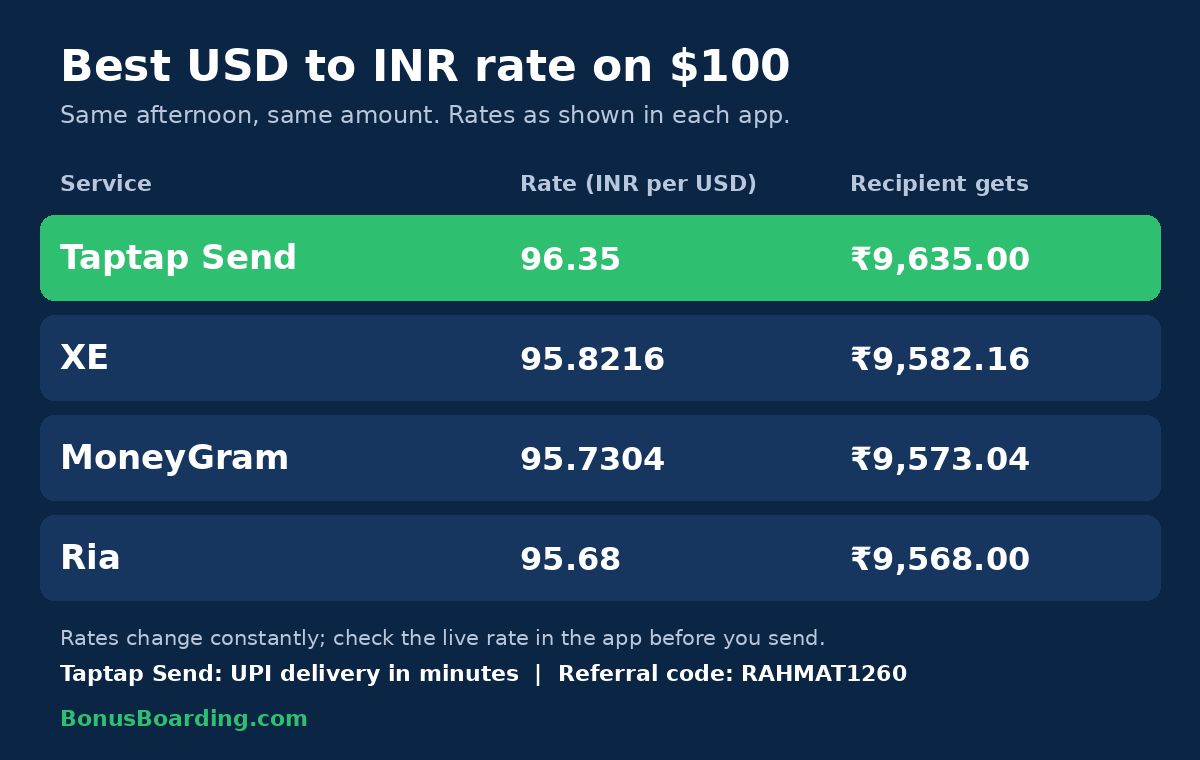
Taptap Send Review: Best USD to INR Rate Compared
What Taptap Send is, how US-to-India transfers work, and how its USD to INR rate compared with XE, MoneyGram and Ria on the same afternoon.
- Build Credit
How to Build US Credit From Zero: Secured Cards, Loans, and Quick Wins
No SSN? Thin file? Here's the honest, step-by-step roadmap to building US credit fast — with real numbers and card picks for newcomers.
- Business Cards
How to Build US Business Credit as a Newcomer: First Steps
No SSN? No credit history? Here's exactly how H-1B workers, F-1 students, and new immigrants start building US business credit from zero.

Join the discussion
Share your take, ask a question, or swap tips with other readers. Be kind — we moderate.