Best Balance Transfer Credit Cards of 2026
A balance transfer lets you move high-interest credit card debt to a new card with a 0% intro APR — giving you months to pay it off without interest piling up. I’d do one without hesitation if I were carrying high-rate debt; the right card can save you hundreds or even thousands of dollars.
Here are the best balance transfer cards available right now.
What to Look For in a Balance Transfer Card
Before getting into specific cards, understand the key variables:
- Length of 0% period: The longer, the better. Most cards offer 12-21 months.
- Balance transfer fee: Usually 3-5% of the amount transferred. A 3% fee on $5,000 = $150.
- Regular APR after the intro period: Matters if you don’t pay off the full balance in time.
- Annual fee: Most dedicated balance transfer cards have none.
Best Overall: Citi® Diamond Preferred® Card
The Citi Diamond Preferred offers one of the longest 0% balance transfer periods available — typically 21 months on balance transfers (and 12 months on purchases).
- Balance transfer fee: 5% ($5 minimum)
- Annual fee: $0
- After intro period: Variable APR applies
21 months is the sweet spot for paying down significant debt. If you owe $5,000 and use 21 months, you need to pay about $238/month to be debt-free with no interest paid.
Best for Low Transfer Fee: Citi® Double Cash Card
The Citi Double Cash is primarily a rewards card (2% cash back on everything), but it also offers a strong balance transfer deal — typically 18 months at 0% with a 3% transfer fee (lower than many competitors).
If you’re comparing a card with a 5% fee and 21 months vs. a 3% fee and 18 months, the math usually favors the lower fee unless your balance is very large and you genuinely need the extra 3 months.
Best No-Fee Option: Consider credit unions
Some credit unions offer balance transfer cards with no transfer fee — a rare find. If you’re a member of a credit union, check their credit card offerings before going with a major bank. You’ll sacrifice some of the intro period length, but eliminating the fee can save more overall.
How to Calculate Your Savings
Here’s how to figure out whether a balance transfer makes sense:
- Current balance: Say $6,000
- Current APR: 24%
- Monthly interest you’re paying: ~$120/month
- Transfer fee (3%): $180 one-time
Break-even point: $180 fee ÷ $120/month saved = 1.5 months. After that, every month is pure savings. Over 18 months you’d save roughly $180 × 18 − $180 = $1,980.
Unless your debt is very small, a balance transfer almost always saves meaningful money.
Step-by-Step: How to Do a Balance Transfer
1. Apply for the balance transfer card. Make sure you have at least fair-to-good credit (670+). Apply before you need to — it takes time.
2. Request the transfer. During or after application, tell the new card issuer which accounts you want to transfer from, and the amounts.
3. Keep paying your old card. Until the transfer completes (usually 1-3 weeks), keep making minimum payments on your old card to avoid late fees.
4. Confirm the transfer completed. Check both accounts — old balance should be zero (or reduced), new card should show the transferred balance.
5. Pay down the new card aggressively. Divide the total balance by the number of months in the 0% period. That’s your monthly target to be debt-free before interest kicks in.
Common Balance Transfer Mistakes
Stopping payments on the old card too soon. The transfer takes time. Miss a payment on the old card and you’ll get a late fee.
Making new purchases on the balance transfer card. Many cards apply payments to the lowest-APR balance first. New purchases at regular APR can sit and accrue interest while your payments go toward the 0% balance. Use a separate card for new spending.
Not having a payoff plan. If you reach the end of the 0% period with remaining balance, you’ll be hit with the card’s regular APR — often 18-27%. Run the numbers before you transfer.
Applying for multiple cards at once. Each application is a hard inquiry. Space out applications and only apply for cards you’re likely to get.
Is a Balance Transfer Right for You?
A balance transfer is a great tool if:
- You have good enough credit to qualify (generally 670+)
- Your debt is large enough that the transfer fee is worth it (typically $2,000+)
- You can realistically pay it down within the 0% window
- You won’t accumulate new debt on other cards
It’s not a magic fix — you still have to pay off the balance. But eliminating interest for 12-21 months dramatically accelerates progress.
Always verify current rates, fees, and terms directly with card issuers — these details change and your specific offer may differ.
Frequently asked questions
How much credit do I need to qualify for a balance transfer card?
Most balance transfer cards require at least good credit — generally a FICO score of 670 or higher — to qualify. The best cards with the longest 0% periods (18 to 21 months) typically want scores of 700 or above. If your score is in the fair range (580 to 669), you may still qualify for some offers, but the promotional period may be shorter and the regular APR higher. Check your score before applying so you have a realistic picture of what you are likely to get.
Does a balance transfer affect my credit score?
A balance transfer affects your credit in a few ways. The application creates a hard inquiry, which can temporarily lower your score by a few points. Opening a new account also increases your total available credit, which can reduce your utilization ratio and help your score. Once the transfer completes, your old card’s balance drops to zero (or near it), which further reduces utilization — often a net positive for your score. Making on-time payments on the new card continues to build positive history. Overall, if used responsibly, a balance transfer tends to be neutral to mildly positive for your credit over time.
Can I use a balance transfer card for new purchases too?
You can, but it is usually a mistake during the payoff period. Many card issuers apply your payments to the lowest-APR balance first — meaning your payments go toward the 0% transferred balance while any new purchases at the regular APR sit and accrue interest. To avoid this, use a separate card for new purchases while you are paying down the transferred balance. Once the transfer balance is cleared, the balance transfer card may be worth keeping as an everyday card if it has good ongoing benefits (like the Citi Double Cash’s 2% back on everything).
Is there a limit to how much I can transfer?
Yes. The amount you can transfer is limited to your approved credit limit on the new card, minus the transfer fee. If you are approved for a $5,000 limit and the fee is 3%, the maximum transferable balance is roughly $4,850. You cannot transfer more than your credit limit, and some issuers also impose a separate maximum transfer amount below your credit limit. If you have more debt than the new card’s limit covers, you may need to prioritize which balance to transfer first — generally start with the highest-interest debt.
Keep reading
- Balance Transfers
How Balance Transfers Work: A Complete Guide
Everything you need to know about balance transfers — how they work, what they cost, and how to use them to pay off debt faster.
- Credit for Immigrants
Taptap Send Review: Best USD to INR Rate Compared
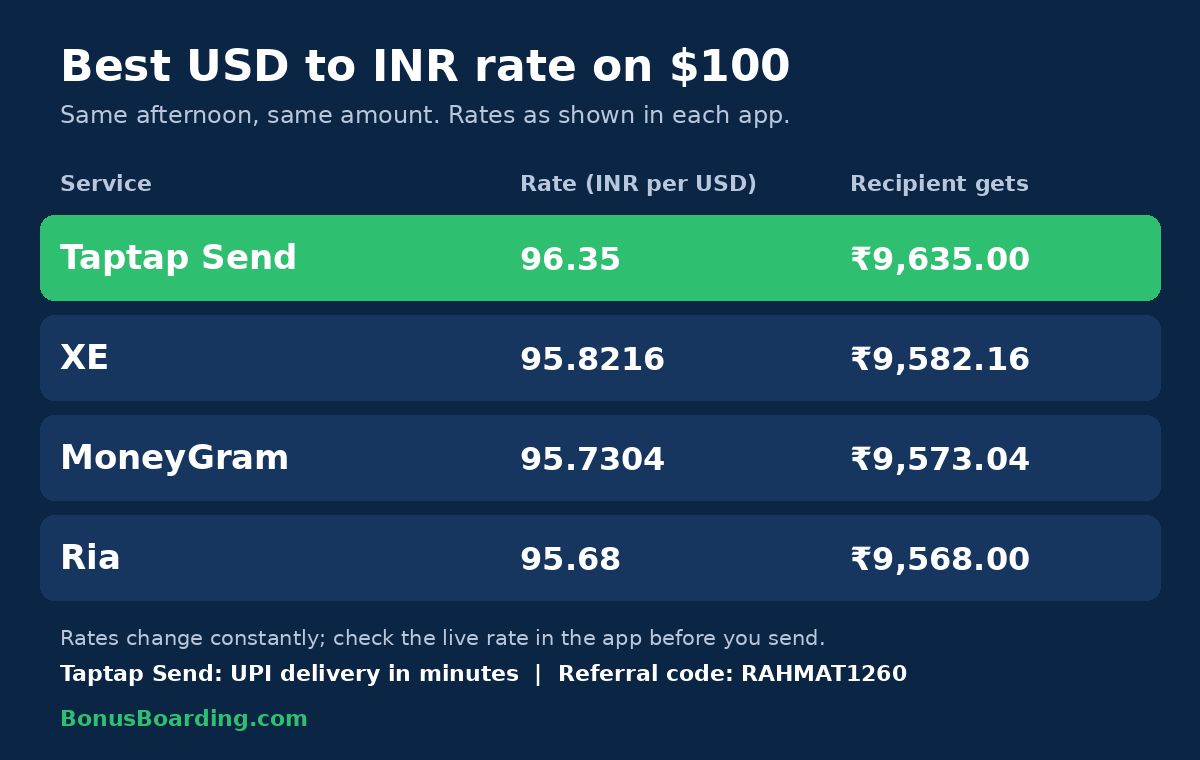
What Taptap Send is, how US-to-India transfers work, and how its USD to INR rate compared with XE, MoneyGram and Ria on the same afternoon.
- Build Credit
How to Build US Credit From Zero: Secured Cards, Loans, and Quick Wins
No SSN? Thin file? Here's the honest, step-by-step roadmap to building US credit fast — with real numbers and card picks for newcomers.

Join the discussion
Share your take, ask a question, or swap tips with other readers. Be kind — we moderate.