Your first US credit card with no credit history: every path that works

“No credit history” reads as risk to US banks — even if you’ve banked impeccably elsewhere for years. The good news: several paths are designed for exactly this situation. Here they all are, ranked by how I’d actually approach it.
Path 1: use your international credit history
If you built credit in India, the UK, Mexico, and several other countries, some US issuers can pull that history through Nova Credit when you apply. You skip straight to a real unsecured card with a real limit.
Check this first. Eligibility depends on issuer and country, and it’s the single biggest shortcut available to newcomers.
Path 2: your bank’s starter card
Open checking and direct-deposit your salary for a couple of months, then apply for that bank’s entry-level card. Banks are measurably more willing to approve existing customers — the relationship is data they trust.
Path 3: student cards
On an F-1 or J-1 visa? Student cards are built for thin files, often with no annual fee and modest rewards, and they typically accept applicants with no history at all.
Path 4: secured cards — the guaranteed fallback
You deposit (usually $200–$500), and that becomes your credit limit. The card reports to all three bureaus exactly like a regular card, and good issuers upgrade you to unsecured and refund the deposit within 6–12 months.
What to demand from a secured card:
- $0 annual fee
- Reports to all three bureaus (Equifax, Experian, TransUnion)
- A published path to graduate to unsecured
Comparing the paths
| Path | Speed to real card | Difficulty |
|---|---|---|
| International history | Immediate | Depends on country/issuer |
| Bank relationship | 2–3 months | Easy |
| Student card | Immediate (students) | Easy |
| Secured card | 6–12 months | Trivial |
After approval: the only three rules
- Pay in full by the due date, every month, forever.
- Keep reported utilization under 10%.
- Wait at least 6 months before the next application.
Bottom line
Try the international-history route first, fall back to your bank or a student card, and treat a secured card as the reliable last resort. Every path converges at the same place: 12 months of perfect history and full access to the US rewards ecosystem.
How this works in practice
Consider someone who arrived in the US on an H-1B visa with a strong credit history in India. On day one, they have zero US credit history. Here is how the process actually unfolds over about 18 months:
Month 1–2: They open a checking account at a major bank and set up direct deposit from their employer. Within 60 days, they apply for that bank’s entry-level credit card. Approval comes partly because the bank can see real deposit activity and a salary relationship — the relationship lowers perceived risk. They get a modest credit limit ($500–$1,500 is common at this stage) and a card with minimal rewards.
Month 6: They have six months of on-time payments and low utilization (they pay in full every month and never carry more than 10% of the limit). Their credit score has appeared (FICO typically generates after 6 months of reported history) and is in the 680–720 range. They check whether they qualify for an upgrade or a second card.
Month 12–18: With a year of clean history, a score above 700, and two credit accounts, they apply for and are approved for a rewards card — the Chase Sapphire Preferred or similar — that would have been unattainable on day one. The two-year arc from “no history” to “full access to the rewards ecosystem” has compressed to 12–18 months.
The key variable is doing everything right from the start: paying in full, keeping utilization low, not applying for too many accounts too quickly.
Checking your Nova Credit eligibility
If you built credit in India, Canada, Australia, Mexico, the UK, or several other countries, Nova Credit may be able to pull that history for a US issuer — check NovaCreditScore.com for the current list of supported countries and partner issuers. American Express has been among the most active participants, but eligibility changes over time.
The process from your side is simple: when you apply for the card, you opt into the Nova Credit check and authorize Nova to pull your foreign credit report. The issuer reviews it alongside (or in place of) a US credit report. If it works, you skip the secured-card phase entirely and open a real card with a real limit on day one.
What to do while building credit
During the 6–12 months you are building credit, a few habits accelerate your progress and set up the next phase:
- Automate your monthly payment so you never miss a due date. A single 30-day late payment can set your score back significantly and stays on your report for seven years.
- Request a credit limit increase after 6 months. A higher limit at the same spending level improves your utilization ratio.
- Monitor your credit report for errors. Mistakes happen, and disputing them is free through AnnualCreditReport.com.
- Research your next card before applying. After 12 months, you will have options. Knowing your 5/24 count (for Chase) and target products before you apply prevents wasted inquiries.
Pros and cons of each path
International history transfer (Nova Credit)
- Pro: Get a real card immediately with no deposit
- Pro: Skip the secured-card waiting period entirely
- Con: Availability depends on country and current issuer partnerships
Bank relationship card
- Pro: High approval likelihood given the existing relationship
- Pro: Builds credit quickly if you already have a checking account
- Con: Requires 1–3 months of deposit history first
Student cards
- Pro: Designed for thin files; many have no annual fee and basic rewards
- Pro: No deposit required
- Con: Only available to degree-program students; credit limits are modest
Secured card
- Pro: Near-guaranteed approval with a deposit
- Pro: All three bureaus report; upgrade path to unsecured is well-established
- Con: Requires a cash deposit (usually $200–$500) tied up as collateral
- Con: Slower path; 6–12 months before you graduate to a standard card
Frequently asked questions
Will applying for my first card hurt my credit score?
A new application creates a hard inquiry on your credit report, which can lower your score by a few points temporarily — typically 5–10 points. If you have little or no US credit history, your score before the application may be undefined or very low anyway. The long-term benefit of establishing a credit line far outweighs the temporary dip.
How many credit cards should I have at this stage?
Start with one. Build six to twelve months of clean history on a single card before adding a second. Multiple applications in a short period can trigger adverse action from issuers who see a thin file with several recent inquiries — a combination that looks risky.
Can I get a rewards card right away if I use Nova Credit?
It depends on which issuers participate and the quality of your foreign credit profile. Some people open an Amex card directly through the Nova Credit path. Others may be steered toward an entry-level product first. Either way, you will build enough US history within 12 months to access premium rewards cards regardless of the entry point.
What credit score do I need for the Chase Sapphire Preferred or similar travel cards?
Most premium travel cards target applicants with a credit score of 700 or above, some prefer 720+. But credit score is one factor among several — income, credit utilization, account age, and recent inquiries all matter. After 12–18 months of on-time payments on even a basic card, most applicants with stable income are in a competitive range.
Does having a US bank account before applying help?
Yes, meaningfully. Several issuers — most notably Capital One — explicitly offer cards to people with no US credit history through programs that rely on banking data rather than credit bureau data. Even outside those programs, an existing deposit relationship gives an issuer more confidence than a bare-file application.
A note on ITIN applications
If you do not yet have a Social Security number, some issuers — including certain credit unions and a growing number of fintechs — accept an Individual Taxpayer Identification Number (ITIN) instead. An ITIN is obtainable through the IRS. This path takes more effort but can open credit access earlier for newcomers who are still in the SSN application process.
Keep reading
- Cards for Credit
Discover it Secured vs. Capital One Platinum Secured: Which Wins for Credit Beginners?
A head-to-head comparison of two top secured cards for US credit beginners and newcomers — with real numbers, honest trade-offs, and who should pick which.
- Cards for Credit
Best First Credit Cards for Newcomers: Secured vs. Student vs. Global Transfer
H-1B workers, F-1 students, and new immigrants: here's exactly which first card to get, in what order, and why — with real numbers.
- Credit for Immigrants
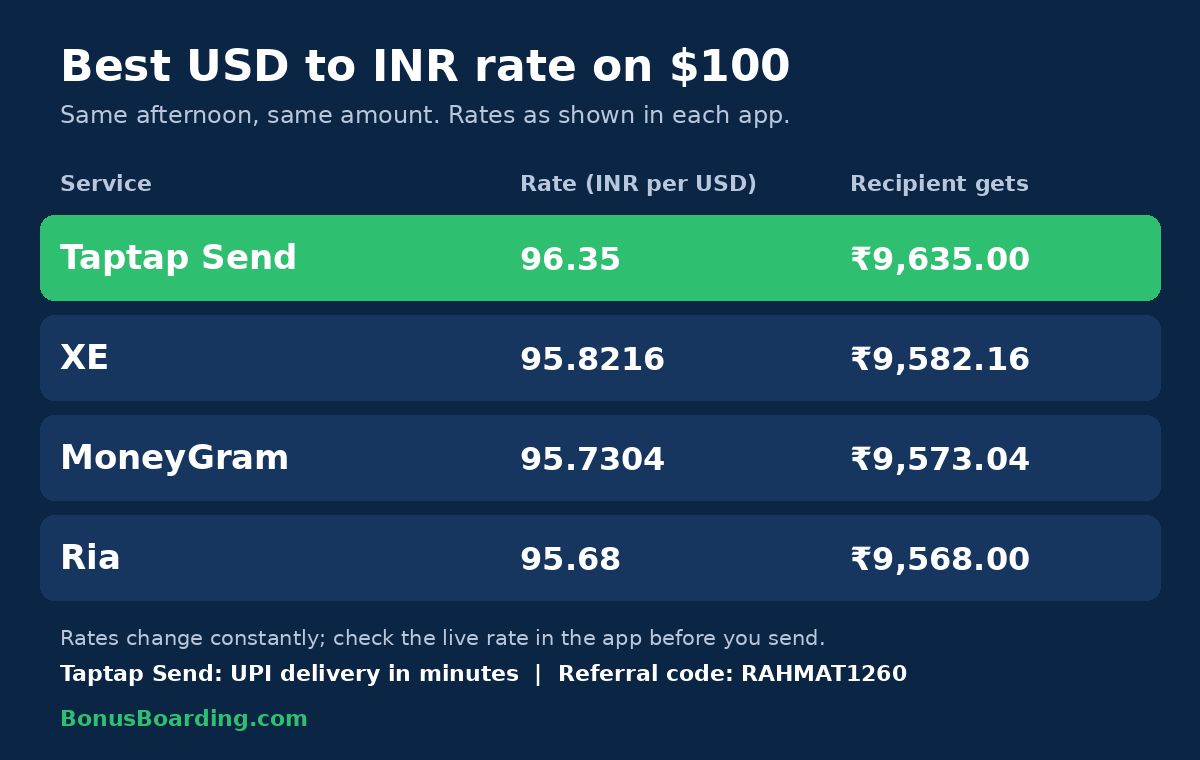
Taptap Send Review: Best USD to INR Rate Compared
What Taptap Send is, how US-to-India transfers work, and how its USD to INR rate compared with XE, MoneyGram and Ria on the same afternoon.
Join the discussion
Share your take, ask a question, or swap tips with other readers. Be kind — we moderate.