5 High-Value Award Redemptions and Why They Work

Earning points is satisfying. But the real payoff — the moment all the strategy actually clicks — comes when you redeem them well. Some redemptions deliver two or three cents of value per point; others can push that figure much higher. Understanding what makes a redemption “high value” helps you recognize those opportunities when they appear — and plan for them intentionally.
Here are five categories of award redemptions that consistently stand out. I keep coming back to these because they work, and they work reliably.
1. International Business or First Class on a Partner Airline
Booking a premium cabin seat — business or first class — through a frequent flyer program often represents one of the strongest uses of points. The sticker price on these seats can be substantial, while the award cost in miles or points is frequently much lower on a per-dollar-of-value basis than an economy redemption on the same route.
The key dynamic: airlines price economy award seats relatively close to their cash cost in cents-per-mile terms. Premium cabin award prices, by contrast, often lag far behind the actual cash fare. A traveler with a flexible points currency (like Chase Ultimate Rewards or Amex Membership Rewards) can transfer to a partner airline and book a premium seat that would otherwise cost many times more in cash.
If you hold a card like the Chase Sapphire Preferred or the American Express Gold Card , your points can transfer to airline partners where these premium bookings live.
The lesson: check the award chart before assuming economy is your only option.
2. Hyatt All-Inclusive Properties
World of Hyatt has a category of all-inclusive resorts where a standard award night covers not just the room but meals, drinks, and activities. When you price out what an all-inclusive stay actually costs in cash — factoring in food and beverages throughout the day — the value per point can rise significantly compared to a standard hotel redemption where you only get the room.
A traveler with enough Hyatt points could book several nights at an all-inclusive and walk away having covered what would otherwise be a substantial vacation budget. Because the incremental cost of food and activities is absorbed into the award rate, the math often works out well.
Check the current World of Hyatt award chart to see which all-inclusive properties fall in which categories — it changes periodically.
3. Airline Stopovers on International Itineraries
Some airline programs allow a stopover (a stay of more than 24 hours in a connecting city) on a round-trip award for no additional points. This effectively lets a traveler turn one award ticket into a visit to two destinations.
For example, a traveler routing through a hub city might be able to spend two or three nights there on the outbound leg, then continue to the final destination — all for the price of a single round-trip award. The practical value of this depends heavily on which airline and which routing rules apply, so research the specific program’s stopover policy before booking.
4. Point Transfers During Bonus Promotions
Occasionally, transferable points programs run limited-time bonuses when you move points to an airline or hotel partner — sometimes 25–40% extra miles or points land in your account. These promotions shift the math in your favor.
A traveler sitting on, say, 50,000 Chase Ultimate Rewards points might choose to wait for a transfer bonus to a specific airline before moving their points, ending up with more miles than a standard 1:1 transfer would produce. This requires patience and flexibility, but when a target redemption is already identified, timing a transfer to a bonus window makes sense.
5. Hotel Points for Peak Dates
Standard cash hotel prices spike dramatically during high-demand periods — holiday weekends, major events, local festivals. Award prices, especially at programs with fixed award charts (rather than dynamic pricing), often do not spike at the same rate.
A property that costs twice the normal cash rate during a peak weekend might still require the same number of points as an off-peak night. This is one of the clearest cases where the value-per-point of a redemption rises simply because cash prices rose while the award cost stayed flat.
It pays to know which hotel programs still use fixed or semi-fixed award charts, and to keep a mental list of dates where you expect cash prices to be high.
What These Redemptions Have in Common
All five share a few traits:
- They take advantage of a mismatch between cash prices and award costs.
- They require some advance planning and flexibility.
- They benefit from transferable points currencies that open up multiple redemption options.
The traveler who earns points with a flexible card and then scouts for these opportunities consistently gets more out of every dollar spent earning.
Bottom Line
High-value redemptions are not accidents — they follow from understanding where the math favors points over cash. Premium cabins, all-inclusive properties, stopover routing, transfer bonuses, and peak-date hotel awards all share a common thread: the spread between cash cost and award cost is wide enough to justify the effort. Learn to recognize the pattern, and your points balance goes further.
Keep reading
- Redemption Stories
One Stay, Three Value Buckets: How to Engineer a Marriott Booking
How to stack Amex Hotel Collection credits, Bonvoy elite perks, and points on a single Autograph Collection booking — a full worked example with the math.
- Redemption Stories
How to Plan a High-Value Points Redemption: A Worked Example
Walk through a real planning process — from picking a destination to booking the award — so you can replicate it for your own trip.
- Credit for Immigrants
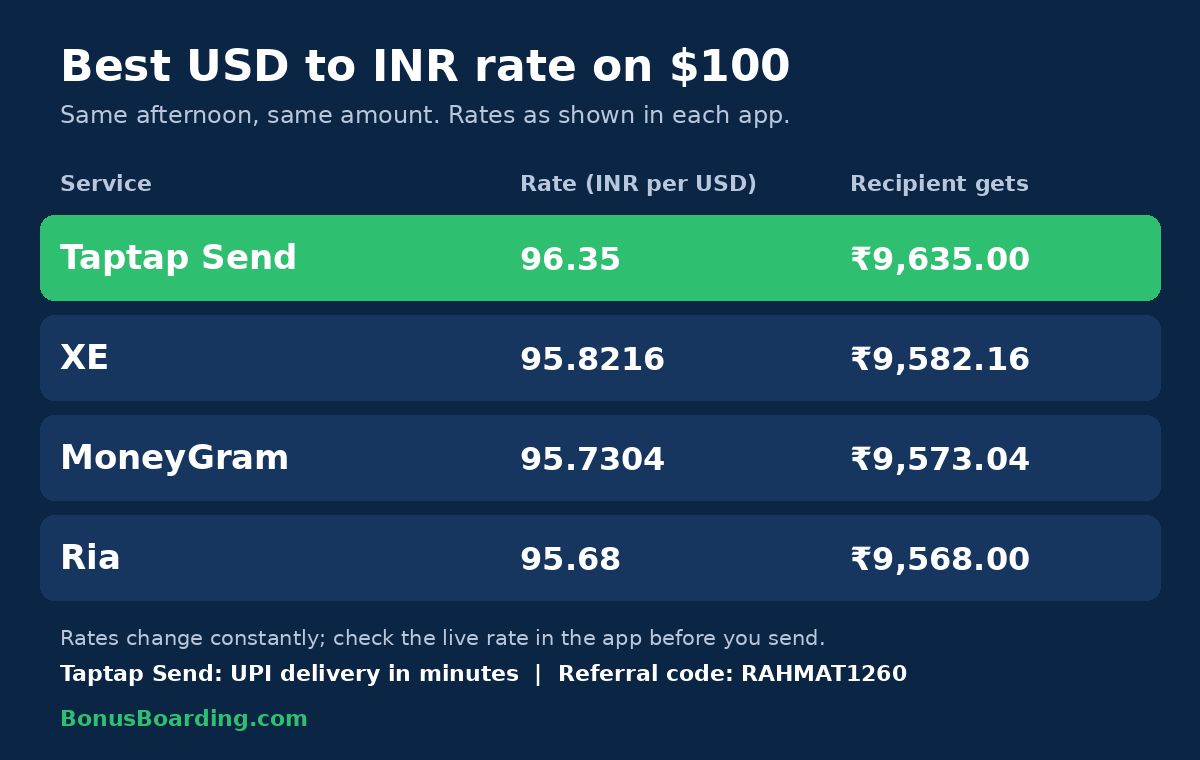
Taptap Send Review: Best USD to INR Rate Compared
What Taptap Send is, how US-to-India transfers work, and how its USD to INR rate compared with XE, MoneyGram and Ria on the same afternoon.


Join the discussion
Share your take, ask a question, or swap tips with other readers. Be kind — we moderate.