How Beginners Earn Their First Free Trip With a Welcome Bonus

The first free trip you earn with points is the one that converts skeptics into believers — and I’d argue there’s no better motivator to actually learn the system. It does not have to be complicated. Most people who get there follow a fairly predictable path: apply for the right starter card, meet the minimum spend, earn the welcome bonus, and then redeem it for something real.
Here is how that process actually works, and what to watch for along the way.
Why the Welcome Bonus Is the Starting Point
Welcome bonuses are the fastest way to accumulate enough points for a meaningful redemption. Organic earning — points from everyday purchases — builds slowly. A welcome bonus can deliver in three months what would otherwise take a year or more of routine spending.
The math is simple: if a card offers a welcome bonus of tens of thousands of points after meeting a minimum spend requirement, a new cardholder who meets that requirement has a meaningful stockpile ready to redeem almost immediately.
This is why choosing the right first card matters more than any other decision in the early stages.
Picking the Right First Card
For most beginners, a mid-tier travel card with an annual fee in the $95 range is the sweet spot. These cards offer:
- A welcome bonus large enough to cover a meaningful trip
- A reasonable annual fee that a single redemption can offset
- Access to transferable points currencies with broad redemption flexibility
The Chase Sapphire Preferred is one of the most commonly recommended first travel cards. Its points (Chase Ultimate Rewards) transfer to a wide range of airline and hotel partners, which gives a beginner flexibility in how they eventually redeem.
If travel is not your primary goal and you want to test the waters with a no-annual-fee option first, a card like the Capital One Venture X (premium tier) or a simpler no-fee cash-back card can still demonstrate how bonus earning works, though the welcome bonuses on no-fee cards tend to be smaller.
Meeting the Minimum Spend Requirement
Welcome bonuses require meeting a minimum spend — typically a few hundred to a few thousand dollars — within the first 90 days. For most people, this is not a stretch: you are not being asked to spend extra money, just to route existing expenses through the new card.
Practical ways to naturally hit the minimum spend:
- Rent or utilities: if your landlord or utility company accepts credit card payments (sometimes with a small fee — check whether the bonus justifies it), this can add up quickly.
- Groceries and gas: everyday essentials build toward the requirement at no extra cost.
- Planned purchases: if you have a larger purchase coming up — electronics, a home improvement item, medical expense — timing it to the first few months on the card helps.
What to avoid: do not manufacture spending by buying things you would not otherwise buy just to hit the minimum. The cost of those purchases erodes the value of the bonus.
Understanding What You Have After the Bonus Posts
Once the minimum spend is met and the bonus posts to your account, you have a lump sum of points. Before redeeming, it is worth taking a few minutes to understand what those points are worth and what your options are.
If you earned Chase Ultimate Rewards points, for example, you can:
- Redeem through the Chase travel portal for a fixed value toward flights, hotels, or car rentals
- Transfer to airline or hotel partners for potentially higher value
- Use for cash back at a lower redemption rate
For a first redemption, many beginners find the travel portal easier to navigate. You search for flights or hotels as you normally would, then pay with points instead of cash. The process is familiar, and the value is transparent.
For slightly more advanced beginners willing to explore transfer partners, a simple domestic flight or a hotel stay through a World of Hyatt transfer can often deliver more value per point than the portal. Either path can get you to a free trip.
A Simple First Redemption That Works
Consider a traveler who has just earned a welcome bonus of around 60,000 points on a travel card. That balance, used through a travel portal at a common redemption rate, could cover several hundred dollars in travel — enough for a domestic round-trip flight or two to three nights at a mid-range hotel.
If the same traveler transfers those points to a hotel partner like World of Hyatt, they might cover more nights at a higher-category property, depending on current award charts.
The trip does not have to be extravagant. A weekend domestic flight, a few nights in a city you have been meaning to visit, or a hotel upgrade to a nicer property than you would normally book — any of these counts as a win.
What to Do After the First Redemption
The first free trip answers a fundamental question: does this actually work? Once you have confirmed the answer is yes, you have a template to repeat. The next steps typically involve:
- Evaluating whether to keep the first card (does the ongoing earning justify the annual fee?)
- Considering a second card to earn bonus points in additional categories
- Building toward a specific future redemption rather than accumulating points without a target
The beginner who earns their first free trip and then sets a goal for the next one is already operating like an experienced points traveler.
Bottom Line
Earning a first free trip with a welcome bonus is more straightforward than most beginners expect. Pick a solid first card, meet the minimum spend with existing purchases, let the bonus post, and then redeem for something real. The mechanics are simple — the payoff is what keeps people coming back.
Keep reading
- Credit Card Wins
Credit Card Wins: 7 Moves That Save Travelers the Most
These seven credit card strategies consistently deliver the biggest savings for frequent travelers — here is how each one works.
- Credit for Immigrants
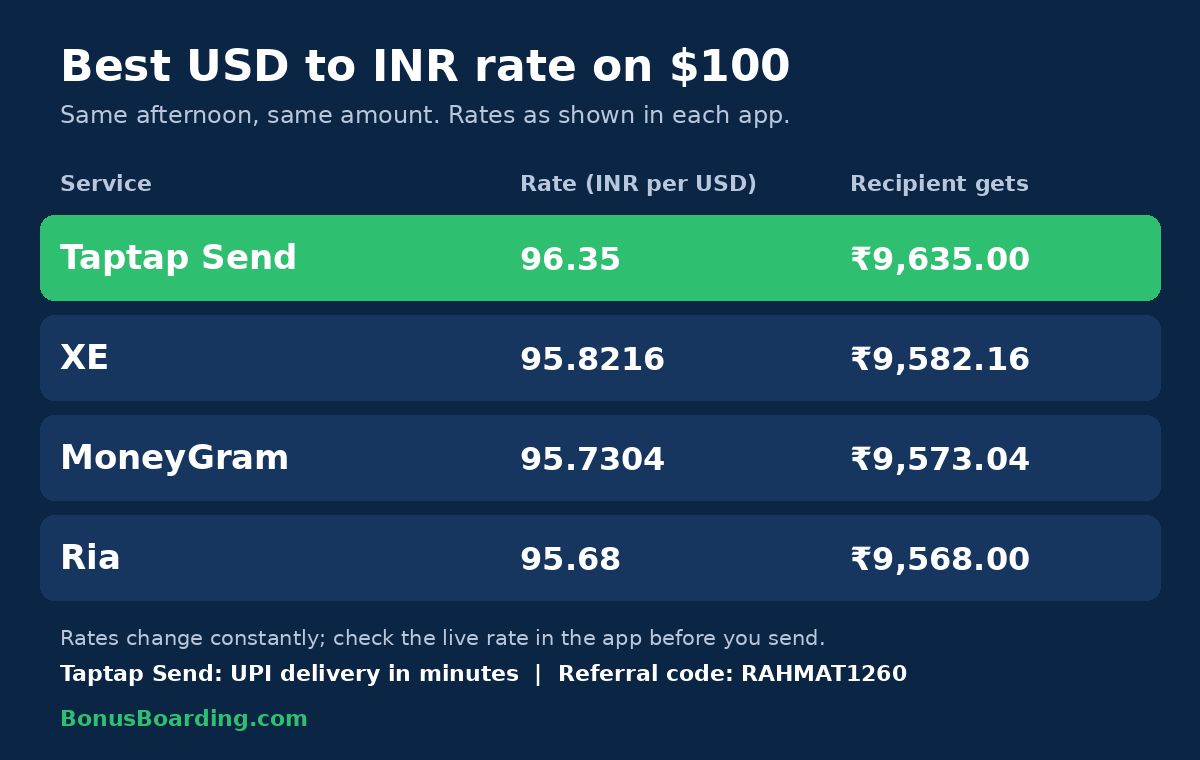
Taptap Send Review: Best USD to INR Rate Compared
What Taptap Send is, how US-to-India transfers work, and how its USD to INR rate compared with XE, MoneyGram and Ria on the same afternoon.
- Build Credit
How to Build US Credit From Zero: Secured Cards, Loans, and Quick Wins
No SSN? Thin file? Here's the honest, step-by-step roadmap to building US credit fast — with real numbers and card picks for newcomers.
Join the discussion
Share your take, ask a question, or swap tips with other readers. Be kind — we moderate.