Credit Card Travel Insurance: The Free Coverage You're Probably Ignoring
One of the most consistently overlooked benefits of a good travel credit card is the insurance built in — coverage you’d otherwise pay for separately, and that most people don’t realize they already have. If you book your trip on the right card, you may already be protected against delays, cancellations, lost bags, and rental car damage, at no extra cost. The catch is you have to know it exists and follow the rules to claim it. I’d argue it’s worth a 10-minute read before your next trip. Here’s what to look for.
The key coverages to know
Trip delay reimbursement. If your flight is delayed beyond a set threshold (commonly 6 hours, or overnight), the card reimburses reasonable expenses like meals and a hotel — typically up to around $500 per ticket. This is the benefit most travelers actually end up using.
Trip cancellation and interruption. If you have to cancel or cut a trip short for a covered reason (illness, severe weather, and similar), the card reimburses prepaid, nonrefundable costs — up to $10,000 per person on premium cards like the Chase Sapphire Reserve . Note it covers covered reasons, not simply changing your mind.
Baggage delay and lost luggage. If your bags are delayed, the card reimburses essentials you need to buy in the meantime; if they’re lost, it reimburses the contents up to a limit.
Primary rental car coverage (CDW). This is a big one. Cards like the Chase Sapphire Preferred and Reserve include primary collision damage waiver: decline the rental counter’s expensive insurance, pay with your card, and you’re covered for damage or theft of the rental — saving you real money every time you rent.
Emergency medical (premium cards). Top-tier cards add emergency medical and dental coverage abroad, valuable for international trips where your domestic health insurance may not apply.
The rules that make or break a claim
The coverage is real, but it only works if you follow the conditions:
- Pay for the trip with the card (or with points earned on it). If you booked the flight on a different card, the coverage usually doesn’t apply.
- Know your thresholds. Trip delay might kick in at 6 hours on one card and 12 on another. Check your specific card’s guide.
- Keep documentation. Save receipts, delay notices, and itineraries — claims require proof.
- File within the deadline. There’s a window to submit a claim; don’t sit on it.
Which cards have the best coverage
The Chase Sapphire Preferred is the value champion here — for a modest annual fee it includes trip delay, cancellation/interruption, baggage, and primary rental car CDW. The Chase Sapphire Reserve raises the limits and adds emergency medical. Premium cards from other issuers vary widely, and some popular cards include surprisingly little travel insurance — so never assume; read your benefits guide.
Bottom Line
A good travel card can replace the trip insurance you’d otherwise buy: trip delay, cancellation, baggage, and especially primary rental car coverage that lets you decline the rental counter’s pricey add-on. The Chase Sapphire Preferred is the standout value. Just remember the rules — book the trip on the card, know your delay thresholds, keep your receipts, and file on time — because the coverage is only as good as your paperwork.
How this works in practice
Say you book a long weekend in Miami: a $400 flight and a $600 hotel — $1,000 in prepaid, nonrefundable costs — all paid on a Chase Sapphire Preferred. On the morning of departure, your flight is cancelled due to severe weather and rebooking puts you 8 hours behind schedule.
Here is what the card’s coverage does for you:
- Trip delay: Because the delay exceeds 6 hours, you are entitled to reimbursement for reasonable meals and incidentals (up to $500 per covered traveler). You grab dinner, a hotel room if needed, and save your receipts.
- Trip cancellation/interruption: If you had to cancel the trip entirely for a covered reason — say a sudden illness — the card would reimburse your nonrefundable hotel and flight costs, subject to your policy limits and covered reasons.
When you return home, you file the claim through the Sapphire’s benefit administrator with your receipts, the airline’s written delay notice, and your booking confirmation. Within a few weeks, you receive a reimbursement check.
Without the card benefit, you would have paid those out-of-pocket expenses yourself. The coverage cost you nothing extra — you simply booked the trip on the right card.
Pros and cons of credit card travel insurance
Pros
- It is free — included as a card benefit without a separate premium, unlike stand-alone travel insurance that typically costs 5–10% of the trip price.
- Primary rental car CDW on cards like the Sapphire Preferred and Reserve is particularly valuable: you can decline the rental counter’s collision damage waiver (often $15–$30 per day) and be covered for the entire rental at no extra cost.
- Trip delay reimbursement is the benefit most travelers actually use, and on a card like the Sapphire Preferred the threshold (6 hours) is low enough to trigger regularly.
- The coverage applies automatically when you pay with the card — there is no enrollment, no separate policy to purchase.
Cons
- It only covers covered reasons, which are defined in the benefit guide. Changing your mind about a trip, or a cancellation because a companion’s plans changed, typically does not qualify.
- You must pay for the trip with the specific card (or in some cases, points earned on it) for coverage to apply. Splitting the cost with another card can complicate claims.
- Documentation requirements are real: without receipts, delay notices, and itineraries, claims can be denied even if the event qualifies.
- Coverage limits are meaningful but not unlimited — a $500 trip delay limit or $10,000 cancellation limit may not cover a very expensive trip.
- Medical coverage is limited or absent on most mid-range cards; for international travel, consider a separate travel medical policy for serious health emergencies.
Credit card travel insurance vs. stand-alone travel insurance
Knowing when to use your card’s built-in coverage — and when to buy a separate policy — is the key judgment call.
Use your credit card’s coverage when:
- The trip cost is moderate (under $10,000 in nonrefundable costs)
- You are taking a domestic trip where medical coverage is not a major concern
- You are renting a car and want to skip the counter’s CDW
- You want zero-cost protection and are comfortable with the covered-reasons list
Consider a stand-alone travel insurance policy when:
- You are spending a large amount on a once-in-a-lifetime trip (a cruise, a multi-country international itinerary) where the stakes of cancellation are high
- You want “cancel for any reason” (CFAR) coverage, which credit cards do not offer
- You are traveling internationally and need strong emergency medical evacuation coverage
- You are over 70 and have health conditions that a trip insurer can cover but a credit card cannot
The practical middle ground for most travelers: rely on your card’s built-in coverage for everyday trips and rentals, and buy a supplemental policy only for major international trips where medical evacuation or CFAR matters.
Frequently asked questions
Does my entire trip need to be booked on the card for coverage to apply?
Generally, yes — at least the primary transportation (your flight or the first mode of travel). Some benefits, like rental car CDW, require you to pay for the rental entirely on the card. If you use points to book the flight but the points are from that card, coverage typically still applies. Read your specific card’s benefit guide for the exact language.
What counts as a “covered reason” for trip cancellation?
Most credit card trip cancellation policies cover events like: illness, injury, or death of you or an immediate family member; severe weather that makes travel impossible; jury duty; or a subpoena. They do not cover: simply changing your mind, work schedule changes, or most fear-based cancellations. The covered-reasons list is specific — always check your card’s benefit guide before assuming a cancellation will be covered.
Is primary rental car coverage really different from secondary?
Significantly. Secondary coverage pays only after your personal auto insurance has paid — meaning you file a claim with your auto insurer first (with the rate impact that involves), and the card covers the remainder. Primary coverage pays first, with no involvement of your auto insurer. The Chase Sapphire Preferred and Reserve both offer primary CDW, which is a major differentiator from most other travel cards.
What documentation do I need to file a claim?
Standard requirements include: your card statement showing the trip purchase, the airline’s or carrier’s written confirmation of the delay or cancellation, receipts for any expenses you are claiming, and your itinerary. For trip cancellation, you will also need documentation of the covered reason (a doctor’s note for illness, for example). Collect all documentation at the time of the incident — it is much harder to obtain delay records weeks later.
Does credit card travel insurance cover pre-existing medical conditions?
Generally no. Standard credit card trip cancellation policies exclude cancellations caused by pre-existing conditions. If this is a concern, a stand-alone travel insurance policy with a pre-existing condition waiver (available if purchased within a short window of your first trip deposit) is the appropriate tool.
Keep reading
- Credit for Immigrants
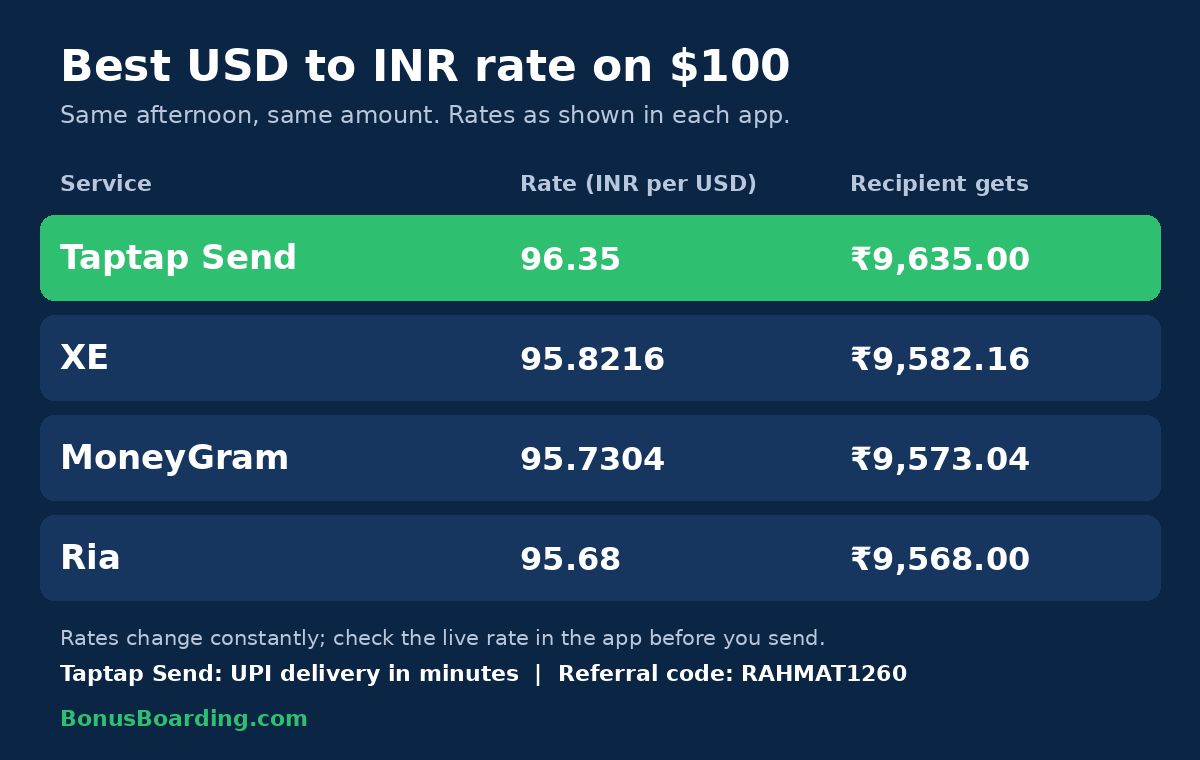
Taptap Send Review: Best USD to INR Rate Compared
What Taptap Send is, how US-to-India transfers work, and how its USD to INR rate compared with XE, MoneyGram and Ria on the same afternoon.
- Build Credit
How to Build US Credit From Zero: Secured Cards, Loans, and Quick Wins
No SSN? Thin file? Here's the honest, step-by-step roadmap to building US credit fast — with real numbers and card picks for newcomers.
- Business Cards
How to Build US Business Credit as a Newcomer: First Steps
No SSN? No credit history? Here's exactly how H-1B workers, F-1 students, and new immigrants start building US business credit from zero.


Join the discussion
Share your take, ask a question, or swap tips with other readers. Be kind — we moderate.