Best Travel Credit Cards: How to Choose the Right One in 2026

“Best travel credit card” is the wrong question — the right one is best for how you travel. A points-obsessed flyer, an Atlanta-based Delta loyalist, and someone who just wants a free checked bag need completely different cards. This guide breaks travel cards into their real categories so you can pick the one that fits.
Start with flexibility
The most important principle, echoed by nearly every expert: prioritize flexible, transferable points unless you have a specific reason not to. Cards that earn transferable currencies (Chase Ultimate Rewards, Amex Membership Rewards, Capital One miles, Citi ThankYou) let you redeem for cash, book through a portal, or transfer to airline and hotel partners — so you’re never locked into one program. Airline and hotel co-branded cards lock your rewards to a single brand, which only makes sense if you’re loyal to that brand.
The four types of travel cards
1. Flexible-points cards (best for most people). These earn transferable points and are the backbone of a good setup. The Chase Sapphire Preferred is the perennial best all-around value — modest annual fee, strong travel insurance, and transfers to partners like United, Hyatt, and Marriott. It’s the card most people should start with.
2. Premium flexible cards (for frequent travelers). If you fly often and value lounges and credits, premium cards earn their higher fees through perks. The Capital One Venture X is widely cited as the best premium value — a $300 travel credit and an anniversary miles bonus largely offset its $395 fee. The Chase Sapphire Reserve leads on lounge access and trip protections, and the Amex Platinum offers the deepest lounge network and travel credits. Only worth it if you’ll use the perks.
3. Airline cards (for brand loyalists). A co-branded airline card makes sense if you consistently fly one airline. The value isn’t the miles — it’s the perks: a free checked bag, priority boarding, and discounts that often save more than the annual fee for anyone who flies that airline a few times a year.
4. Hotel cards (for brand loyalists). Same logic for hotels. Cards like the Hilton, Marriott, and IHG cards grant automatic elite status and an annual free night that frequently exceeds the fee. Great if you stay with one chain.
How to choose
- Just starting? Get one flexible-points card (the Sapphire Preferred is the safe pick) and learn the system before adding more.
- Fly one airline a lot? Add that airline’s card for the free bag and boarding perks.
- Stay with one hotel chain? Add its card for free-night and status value.
- Travel frequently and want perks? Step up to a premium flexible card — but only if you’ll use the lounges and credits.
- Always check the welcome bonus is at a high before applying, and mind issuer rules like Chase 5/24.
Bottom Line
The best travel card depends on you, but the rule of thumb is to build around flexible, transferable points first — the Chase Sapphire Preferred is the standout all-around choice. Add airline or hotel co-branded cards only for brands you’re genuinely loyal to (the free bag, status, and free-night perks are the real value), and step up to a premium card like the Venture X only if you’ll actually use the lounges and credits. Match the card to how you travel, not to a “best card” list.
How this works in practice
Consider two different travelers making their first travel card choice:
Traveler A lives in Dallas, flies American Airlines three or four times a year for work, and stays at Marriott properties when traveling. She should probably pair a flexible-points card (Chase Sapphire Preferred or similar) as her base with a co-branded American Airlines card for the free checked bag. The AA card’s bag savings alone — one free bag each way, a few times a year — can exceed the annual fee. The Sapphire Preferred handles everything else and builds Ultimate Rewards she can transfer to Hyatt when she wants a nice hotel.
Traveler B is a recent college grad who flies maybe twice a year, stays wherever is cheapest, and wants travel rewards without overthinking it. He should start with just one card: the Chase Sapphire Preferred (or its no-annual-fee cousin, the Chase Freedom Unlimited, while building credit). Simple earning, flexible redemption, and good travel insurance without the complexity of managing multiple programs.
The difference: Traveler A has a specific brand to optimize around, so a targeted co-branded + flexible combo makes sense. Traveler B has no brand loyalty and benefits from the simplicity of a single flexible-points card.
What about no-annual-fee travel cards?
Not every travel card charges an annual fee, and for infrequent travelers that matters. The Chase Freedom Unlimited, Capital One VentureOne, and Wells Fargo Autograph are examples of cards that earn rewards usable for travel without a yearly fee.
The trade-off: no-annual-fee travel cards usually earn at lower rates (often 1–1.5x base), may lack travel insurance, and often don’t include lounge access or airline-specific perks. They’re a solid starting point if you’re new to travel cards or if you’re building credit before qualifying for premium products.
The good news is that points earned on a no-fee card often combine with points from a premium card in the same program. For example, Chase Freedom Unlimited points transfer at 1:1 into a Sapphire account, where they can then be moved to airline or hotel partners. So a no-fee card paired with even one premium product can unlock the full flexibility of a transferable-points ecosystem.
Pros and cons of travel credit cards
Pros:
- Welcome bonuses can be worth $500–$1,000+ in travel value, especially in premium cabins
- Travel protections — trip cancellation, baggage delay, car rental coverage — save money when things go wrong
- Co-branded cards deliver perks (free bags, priority boarding, lounge day passes) that have tangible cash value
- Flexible-points cards unlock premium-cabin flights at a fraction of the cash cost when transferred to partners
Cons:
- Annual fees range from moderate to high; value requires you to actually use the perks
- Welcome bonuses require a minimum spend, which can be a stretch for careful spenders
- Co-branded cards lock you into one brand — if your loyalty or travel patterns shift, the value evaporates
- Managing multiple cards and programs takes some attention; the system rewards people who pay attention
Comparing the Chase Sapphire Preferred and Preferred Reserve
The two Chase Sapphire cards are the most commonly compared flexible-points cards. The Sapphire Preferred carries a lower annual fee, earns 3x on dining and travel, and includes solid trip protection — it’s the right card for most people. The Sapphire Reserve has a higher annual fee but includes a $300 travel credit (which effectively lowers the net cost), Priority Pass lounge access, higher earning on travel and dining, and stronger travel protections. The Reserve pays off if you fly frequently enough to use the lounge access regularly and if the $300 credit covers spending you’d do anyway. For everyone else, the Preferred offers 80% of the value at a fraction of the fee.
Frequently asked questions
Should I get a travel card or a cash-back card?
The answer depends on how you’ll use the rewards. Travel cards — especially those with transferable points — typically deliver higher value per point than cash-back cards when redeemed well (transfers to airline and hotel partners). Cash-back cards are simpler: the reward is always worth exactly what it says, with no research required. If you travel at least a few times a year and are willing to spend an hour or two understanding the basics of transfer partners, a travel card usually wins on value. If you want simplicity and certainty, cash back is perfectly fine.
What is the Chase 5/24 rule and why does it matter?
Chase generally will not approve new applications for most of its cards if you’ve opened 5 or more credit cards across any issuer in the past 24 months. This is known informally as the “5/24 rule.” It’s not officially published but is widely confirmed. The practical implication: if you want Chase cards — especially the Sapphire Preferred or Reserve — apply for those first, before opening cards from other issuers that would count toward your 5/24 total.
Can I have both the Sapphire Preferred and Sapphire Reserve?
No. Chase will not allow you to hold both Sapphire cards simultaneously. You can product-change between them (from Preferred to Reserve or vice versa) but cannot hold two Sapphire cards at once.
How do travel insurance benefits actually work on credit cards?
Most travel cards include insurance as a cardholder benefit — not a separate product you buy. To activate the coverage, you generally need to charge the relevant purchase to the card (your flight for trip cancellation insurance, your rental car for auto coverage). When a covered event occurs, you file a claim with the card’s benefits administrator. Reimbursement limits and covered events vary by card, so reading the benefits guide when you open the card is worth the 20 minutes it takes.
What’s the best travel card for someone with average credit?
Premium travel cards typically require good to excellent credit (generally 700+ FICO). If you’re building credit, secured cards or student cards are the typical starting point. Once your score is established, a mid-tier travel card with a lower annual fee (or a no-fee option like the Chase Freedom Unlimited) is usually the right first travel-focused card. The welcome bonuses and partner transfers of premium cards become accessible once you’ve built a solid credit history.
Related reading
Keep reading
- Travel Cards
Avis Toll Nightmare: What Renters Should Do Now
A stolen Avis toll transponder reportedly triggered thousands in charges. Here’s how renters should protect themselves and what else changed this week.
- Credit for Immigrants
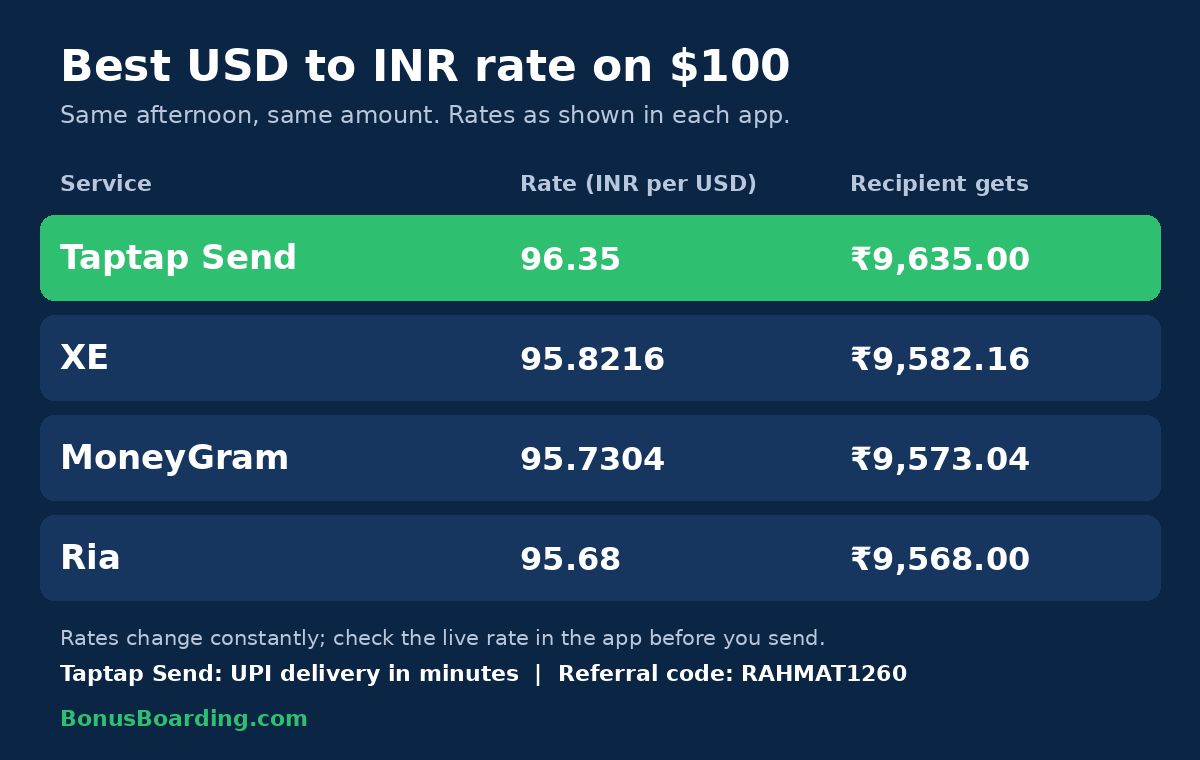
Taptap Send Review: Best USD to INR Rate Compared
What Taptap Send is, how US-to-India transfers work, and how its USD to INR rate compared with XE, MoneyGram and Ria on the same afternoon.
- Build Credit
How to Build US Credit From Zero: Secured Cards, Loans, and Quick Wins
No SSN? Thin file? Here's the honest, step-by-step roadmap to building US credit fast — with real numbers and card picks for newcomers.
Join the discussion
Share your take, ask a question, or swap tips with other readers. Be kind — we moderate.