Transferable points 101: why flexible currencies beat airline miles

The most valuable points aren’t airline miles — they’re the flexible currencies that can become airline miles at the moment you need them. I’d argue this is the single most important concept to internalize in this hobby.
The four big flexible currencies
| Currency | Earned with | Transfers to (examples — verify) |
|---|---|---|
| Chase Ultimate Rewards | Sapphire, Freedom family | United, Hyatt, Aeroplan, Flying Blue |
| Amex Membership Rewards | Gold, Platinum | Delta, Aeroplan, ANA, Avios |
| Capital One Miles | Venture family | Aeroplan, Avianca, Turkish |
| Citi ThankYou | Strata family | Avianca, Turkish, Flying Blue |
Most transfers are 1:1 and complete instantly or within a day or two.
Why flexibility wins — and why I’d default here
Airline miles devalue without notice, and you’re stuck. Flexible points let you wait until you find the award you want, then transfer to whichever partner prices it best. Same trip, two different partners, sometimes a 40% price difference.
The cardinal rule
Never transfer points until you’ve found bookable award space. Transfers are irreversible. Find the seat, confirm it’s bookable, then move exactly the points you need.
Overlap is your friend
Several partners — Aeroplan, Avianca, Flying Blue, Turkish — accept transfers from multiple currencies. If you hold points in two ecosystems, these shared partners let you pool toward one award.
How this fits a beginner’s strategy
- Start with one ecosystem (Chase is the common recommendation, given 5/24).
- Learn its partners before adding a second currency.
- Keep a small flexible balance rather than hoarding — earn-and-burn beats devaluation risk.
Bottom line
Earn flexible, transfer late, and let partner pricing — not loyalty — pick the airline.
Part of our complete Points & Miles guide. Not sure what your points are worth? See the latest points valuations or run the numbers with our free calculators.
How this works in practice
Say you are planning a trip from New York to Tokyo, and you have accumulated 80,000 Chase Ultimate Rewards points. You could redeem them directly through the Chase travel portal for around 1 cent each — decent, but not the best you can do. Or you could transfer to a partner like United MileagePlus or Air Canada Aeroplan, find business-class award space, and potentially extract two to three cents per point in value.
Here is a realistic scenario: a round-trip business-class flight to Japan might cost $4,000–$6,000 in cash. Booked through Aeroplan with a points transfer from Chase (at 1:1), you cover the ticket and pay only modest taxes and fees out of pocket. The exact point cost depends on current partner award charts — always verify before transferring — but the advantage over a portal redemption is typically substantial.
The same logic applies across programs. Chase transfers to Hyatt for hotel awards — a Hyatt property that costs $250 a night in cash might be bookable for a predictable number of Hyatt points, and Chase transfers at 1:1. The flexibility is the point: you hold Chase points until you know which partner prices your specific redemption best, then move exactly what you need.
Compare that to holding airline miles directly. Many airlines use dynamic pricing and devalue with little notice. You are stuck in one ecosystem. With transferable points, you can evaluate multiple partners before committing.
Which program should beginners start with?
For most US-based beginners, Chase Ultimate Rewards is the standard first recommendation. There are several reasons:
Transfer partners cover a wide range of travel needs. Hyatt for hotels, United for domestic and international flights, Air Canada Aeroplan for Star Alliance partners, Air France-KLM Flying Blue for Europe — most travel goals have at least one strong Chase partner.
The earning cards are accessible. The Chase Sapphire Preferred is widely recommended as a first travel card. The Freedom cards (no annual fee) add bonus categories and let you pool points toward a Sapphire.
The 5/24 rule makes timing critical. Because Chase denies applicants who have opened five or more cards in 24 months, getting Chase cards early — before you open cards elsewhere — is strategically smart. This naturally makes Chase a good starting ecosystem.
After Chase, many people add American Express Membership Rewards. Amex has partners that are useful for premium international redemptions, including some programs not reachable from Chase. Capital One Miles and Citi ThankYou round out the ecosystem with their own partner lists.
Pros and cons of transferable points
Pros
- Maximum flexibility: one currency, many airlines and hotels
- You can pick whichever partner prices your specific award cheapest
- Shared partners — Aeroplan, Flying Blue, Avianca — are reachable from multiple programs
- Points are less vulnerable to a single devaluation cycle than co-branded miles
- Transfer bonuses (temporary boosts of 20–40%) occasionally make them even more valuable
Cons
- More complex than a single airline or hotel program
- Transfers are one-way and irreversible — you must confirm bookable award space first
- Award search requires familiarity with multiple partner programs
- Transfer times vary (usually instant to 48 hours, but not guaranteed in all cases)
- Some partners add fuel surcharges that reduce the effective cash value of an award
The complexity is real but manageable. Most people learn two or three partners deeply and cover the vast majority of their travel goals.
Frequently asked questions
How long do transfers take?
Most transfers to airline and hotel partners complete instantly or within a few hours. Some partners take up to two or three business days. Always transfer with enough lead time before your booking deadline — never move points the same day an award expires.
Can I transfer points to a family member’s account?
Generally no, not directly. Most programs require you to transfer to your own loyalty account. Some programs allow transfers to a spouse or household member in limited ways — check each issuer’s current terms. Pooling points from two people toward one award typically has to happen within the airline or hotel program itself, where rules vary by program.
What happens to my points if I cancel my credit card?
This depends on the issuer. Chase Ultimate Rewards points disappear if you close a Sapphire card and have no other qualifying Chase rewards card — you can prevent this by downgrading to a no-fee Freedom card instead of canceling. Amex Membership Rewards points typically survive card cancellation, but verify current terms before acting. Always transfer or use points before closing an account to be safe.
Are transfer bonuses worth waiting for?
Sometimes. If you are not in a hurry and a program you would use anyway runs bonuses periodically, monitoring for a promotion can add meaningful value. But do not delay a booking you need now on the speculation that a bonus might arrive. A confirmed seat beats an optimized transfer that never happens.
Do transferable points expire?
Points generally do not expire as long as your credit card account is open and in good standing. The partner loyalty accounts you transfer into — the airline or hotel programs — have their own expiration rules, and some require account activity every 12–18 months. Check the partner program’s terms and keep accounts active with a small qualifying transaction when needed.
Transferable points vs. airline co-branded miles: a quick comparison
Co-branded airline cards (Delta SkyMiles card, United Explorer card, and similar) earn miles that live only in that airline’s program. They are simpler to understand and can earn bonus miles on that carrier’s flights, but you are locked into one ecosystem.
Transferable points cards earn a flexible currency you can direct to whichever partner works best for each trip. A card that earns Amex Membership Rewards could send points to one airline program for a transatlantic trip and a different hotel program for a city stay.
For someone who flies one airline almost exclusively out of a hub city, a co-branded card can make sense alongside a flexible card. For most people — especially those early in building a travel strategy — the flexible currency is the higher-value default, and adding co-branded cards later is easy once you know which loyalty programs you use most.
Keep reading
- Points 101
How to Start Earning Card Rewards With No US Credit
A practical first-card plan for newcomers, students, and credit beginners who want rewards without damaging their score.
- Points 101
Chase Ultimate Rewards vs. Amex Membership Rewards: Which Is Better?
The two most powerful credit card points currencies compared — transfer partners, earn rates, and which to choose.
- Credit for Immigrants
Taptap Send Review: Best USD to INR Rate Compared
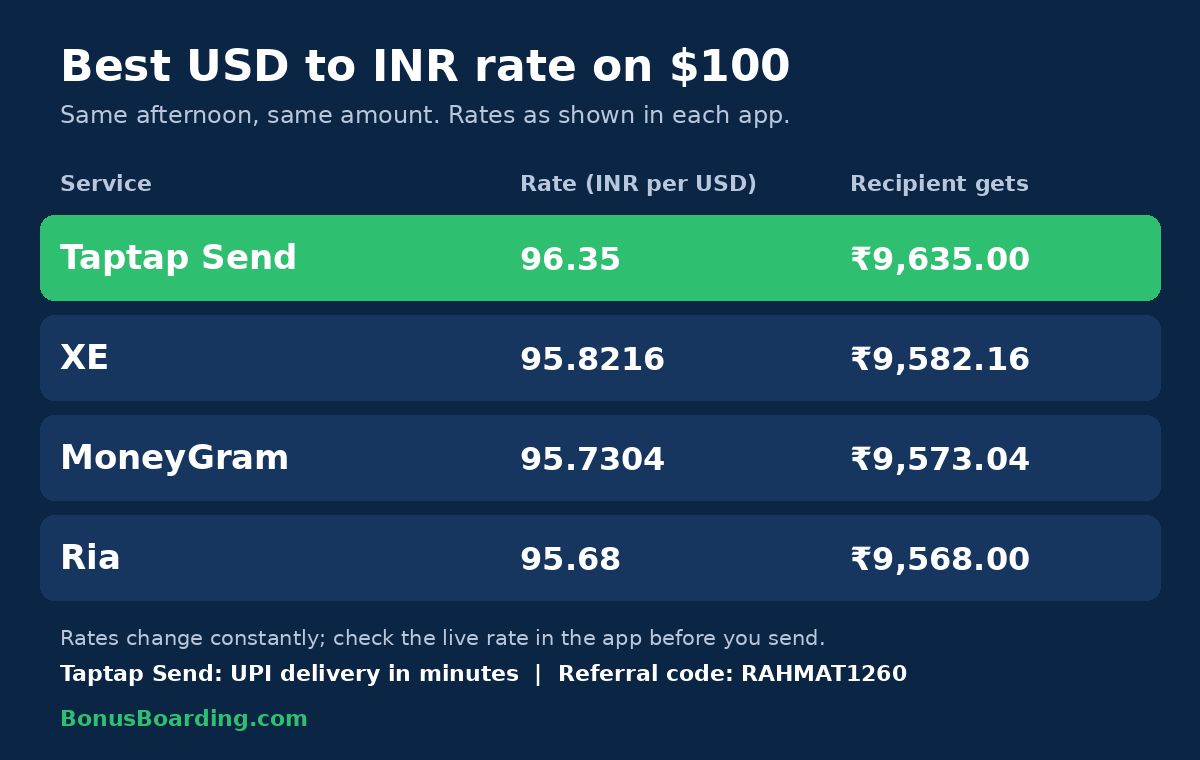
What Taptap Send is, how US-to-India transfers work, and how its USD to INR rate compared with XE, MoneyGram and Ria on the same afternoon.


Join the discussion
Share your take, ask a question, or swap tips with other readers. Be kind — we moderate.