How to Catch the Best Point Transfer Bonus Deals
A transfer bonus — when a bank temporarily boosts the rate at which your points convert to an airline or hotel partner — is free value on top of an already-good redemption. I’d call these one of the most underutilized opportunities in the hobby. But these deals are time-limited and rotate constantly, so the real skill is catching them and acting fast. Here’s how to stay on top of them.
Why these deals are worth watching
During a transfer bonus, your points convert at a sweetened rate — commonly a 20% to 40% boost. With a 30% bonus, 10,000 points become 13,000 partner miles. Stacked on top of a smart partner redemption, that can cut the cost of a premium-cabin award by nearly a quarter. The catch: each promo usually lasts only a few weeks and targets one or two partners at a time.
Where to track live transfer bonuses
The deals move too fast to memorize, so rely on running trackers:
- FrequentMiler and NerdWallet maintain continuously updated lists of current transfer bonuses across Amex, Chase, Capital One, Citi, and Bilt apply →.
- Each bank’s own transfer page shows active promotions when you’re logged in.
- Points community newsletters and alerts flag the best ones as they drop.
Make checking one of these a habit before any large point transfer — you might be one click away from 25% more miles.
How to act fast without making mistakes
Speed matters, but don’t let urgency override the fundamentals:
- Confirm the award is available first. A transfer bonus on points you can’t use is worthless. Find the open flight or hotel award, then transfer.
- Transfer only what you need for that redemption (plus a small buffer). Transfers are one-way and final.
- Know your target partners. Bonuses to Air France-KLM Flying Blue, Virgin Atlantic, and Avios programs come around often — if those fit your travel, you’ll catch good deals regularly.
- Don’t transfer speculatively just because a bonus is live. Points stuck in a program you won’t use are a loss, bonus or not.
A quick example
You want a 60,000-mile award and a 30% transfer bonus is running to that airline. Instead of moving 60,000 points, you transfer about 46,000 and the bonus tops you up. That’s roughly 14,000 points saved — purely for noticing the promo and timing the transfer.
Bottom Line
Transfer bonus deals are fast-moving free value, usually a 20–40% boost when you move points to a partner. Track them on running lists like FrequentMiler and NerdWallet, act quickly when one hits a partner you’ll use, but never break the core rules: confirm the award first, transfer only what you need, and skip the deal entirely if you don’t have a real redemption for those miles.
How this works in practice
Here is a scenario that shows the full process in action:
You hold 55,000 Chase Ultimate Rewards points and you have been watching availability for a business-class award to London. The award costs 60,000 Virgin Atlantic points on their Upper Class chart — just beyond your balance. You have been reluctant to transfer because you are 5,000 points short.
Then a 25% transfer bonus to Virgin Atlantic drops — Chase to Virgin, for the next three weeks. Now your 55,000 Chase points become 68,750 Virgin Atlantic miles after the bonus. You have more than enough to book the award with miles to spare. You confirm the seat is still available, initiate the transfer, receive the miles within 24 hours, and book.
Without the bonus, you would have needed to either earn more points or accept a less favorable partner. With it, the bonus solved both the shortfall and reduced the effective cost of the award to well under 44,000 Chase points in real terms — a strong outcome on a typically expensive route.
This is why active tracking of transfer bonuses pays off disproportionately for people who already know where they want to go.
The programs that run bonuses most often
Not all transfer programs run bonuses at the same frequency. Historically, certain airline partners have appeared in promotions more regularly than others:
Frequent participants (verify current cadence):
- Air France-KLM Flying Blue — has appeared in Amex, Chase, Capital One, and Citi promotions
- Virgin Atlantic Flying Club — historically active in Chase and Amex promotions
- Avianca LifeMiles — has run bonuses with multiple programs
- Singapore Airlines KrisFlyer — periodic promotions, especially with Amex
Less frequent but high-value when they appear:
- United MileagePlus — less common bonus partner but very useful for North American and transpacific bookings
- Turkish Airlines Miles&Smiles — Citi ThankYou promotions have targeted this program
The fact that Flying Blue and Virgin Atlantic appear across multiple currencies means if you hold points in two programs, you may be able to time a bonus in one of them for a redemption you have been planning.
How to set up a tracking system
Rather than manually checking each program’s transfer page, build a minimal habit:
- Bookmark FrequentMiler’s transfer bonus tracker and open it before any points transfer, not after. This takes 30 seconds and can save thousands of points.
- Subscribe to at least one points newsletter — Doctor of Credit, FrequentMiler, and similar sites send alerts when significant promotions launch.
- Set a loose calendar reminder once a month to check for any running bonuses if you have upcoming travel plans.
- Check your issuer’s transfer page while logged in — sometimes promotions are displayed there but not yet widely reported.
This system requires minimal time and pays off most when a bonus coincides with a redemption you were already planning.
Pros and cons of timing transfers around bonuses
Pros
- Free incremental miles or points on transfers you would make anyway
- Can solve a points shortfall without earning more points
- Reduces the effective point cost of an award — a 30% bonus is equivalent to the award costing 23% fewer of your original points
- Encourages a disciplined wait-before-transferring habit that prevents impulsive and irreversible moves
Cons
- Requires patience — a bonus to the partner you need may not appear for months or ever
- Does not help if you need to transfer immediately for an expiring award or a closing booking window
- Promotes holding large flexible balances, which have their own devaluation risk if held too long
- The best bonuses do not always appear for the best partners
Frequently asked questions
How often do transfer bonuses appear?
It varies by program and partner. Some partner combinations run multiple promotions per year; others are rare. There is no fixed schedule. The best approach is passive monitoring through deal trackers rather than expecting a bonus on demand.
Is a 20% bonus worth waiting weeks for?
It depends on whether you have a live award to book. If you have confirmed seat availability and the bonus window runs for two weeks, waiting briefly can make sense — especially if the award costs 50,000+ points where a 20% bonus represents 10,000 free miles. If you do not have a specific redemption in mind, there is nothing to wait for; park the points until you do.
Do transfer bonuses apply to all cards in a program?
Generally yes — the bonus applies to any transfer from your eligible points balance in that program, regardless of which card earned those points. Confirm on the promotion terms page, but cross-card pooling within a single program (for example, Chase Ultimate Rewards points from a Sapphire and a Freedom combined in one account) typically all benefit from the same bonus when you transfer.
Can I split a transfer to use a bonus on part of my points?
Yes. If you need 60,000 miles and have 80,000 flexible points, during a 30% bonus you could transfer as few as 47,000 points (which become 61,100 after the bonus) and keep the rest. Transfer only what you need for the specific redemption.
What if the bonus is to a program I do not use?
Skip it. A bonus that moves points into a loyalty account you have no use for is a net loss — your points are now stranded in a program with no redemption plan. The best bonus is the one that arrives for a partner you were going to use anyway.
Comparing transfer bonuses to earning more points
When you are a few thousand miles short of an award, you have two options: earn the shortfall through spending, or use a transfer bonus to stretch your existing balance. Depending on the numbers, a bonus can be dramatically more efficient.
Earning 5,000 more points through regular spending at 2x might require $2,500 in purchases. A 25% transfer bonus on 50,000 points gives you 12,500 bonus miles for free — no additional spending required. For large awards where the point gap is meaningful, timing a transfer to a bonus window beats the spend-your-way-there approach by a wide margin.
That said, if you need an award immediately and no bonus is running, do not delay for a hypothetical promotion. A confirmed seat beats optimizing a transfer that never comes together.
Related reading
Keep reading
- Transfer Bonuses
Kenya Airways Status Match: A Paid Path to SkyTeam Elite Plus
Kenya Airways' Asante Rewards program offers a paid status match to Gold or Platinum Elite Plus — and that means full SkyTeam Elite Plus perks for a flat fee dependi
- Credit for Immigrants
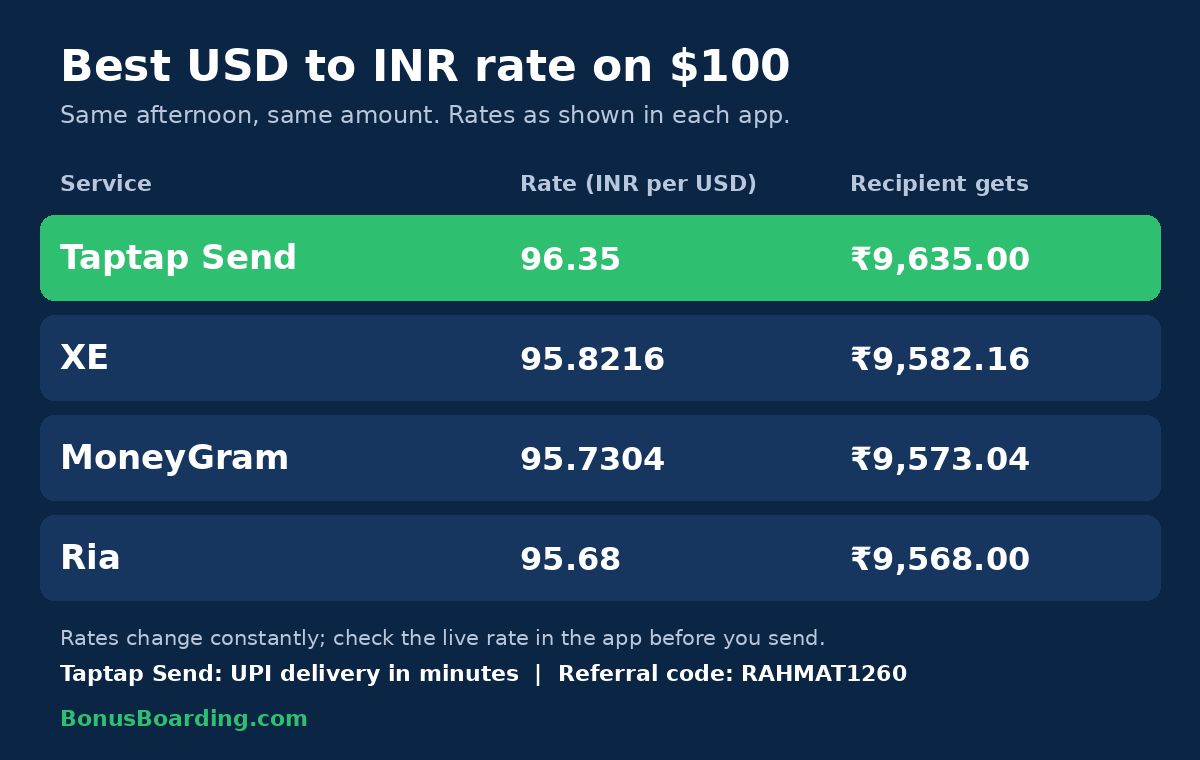
Taptap Send Review: Best USD to INR Rate Compared
What Taptap Send is, how US-to-India transfers work, and how its USD to INR rate compared with XE, MoneyGram and Ria on the same afternoon.
- Build Credit
How to Build US Credit From Zero: Secured Cards, Loans, and Quick Wins
No SSN? Thin file? Here's the honest, step-by-step roadmap to building US credit fast — with real numbers and card picks for newcomers.

Join the discussion
Share your take, ask a question, or swap tips with other readers. Be kind — we moderate.